No, It’s Not Just Mexican Halloween!
It’s a common misconception that Día de los Muertos, or Day of the Dead, is a Mexican version of Halloween. That’s understandable as it’s a time when the dead are believed to return temporarily. However, where Halloween is a time to scare ourselves silly with ghost stories and general spookiness, the Day of the Dead is generally a more joyful celebration and remembrance of departed loved ones.
Its roots reach back to ancient civilisations, and the festival and traditions we recognise today have developed over centuries. The connection with chocolate in particular dates back around 500 years, if not longer!
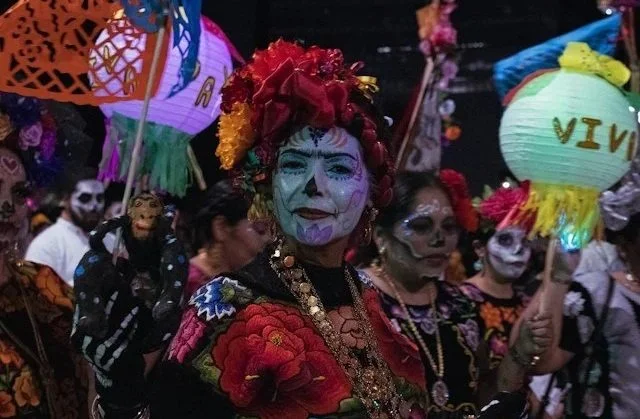
I really don’t want to bore you with a dry old history lesson so here are a few facts to give you the flavour before we move on to the most interesting bit. The chocolate!
Of course, if you’ve seen the Pixar film ‘Coco’, you may already know all this!
(Sorry.)
The Bare Bones
When is it? Dia de los Muertos is mainly celebrated on 1st and 2nd November, coinciding with All Saints Day and All Souls Day (which may also contribute to the confusion with Halloween). I’m writing this on 29th October, so preparations will be well under way.
What’s it about? Families traditionally believe the souls of their departed loved ones can return for a brief visit.
Where did it come from? As I’ve said, the festival began long before the Spanish arrived in Mexico in the 16th century, and their Catholic traditions became mixed with local customs.
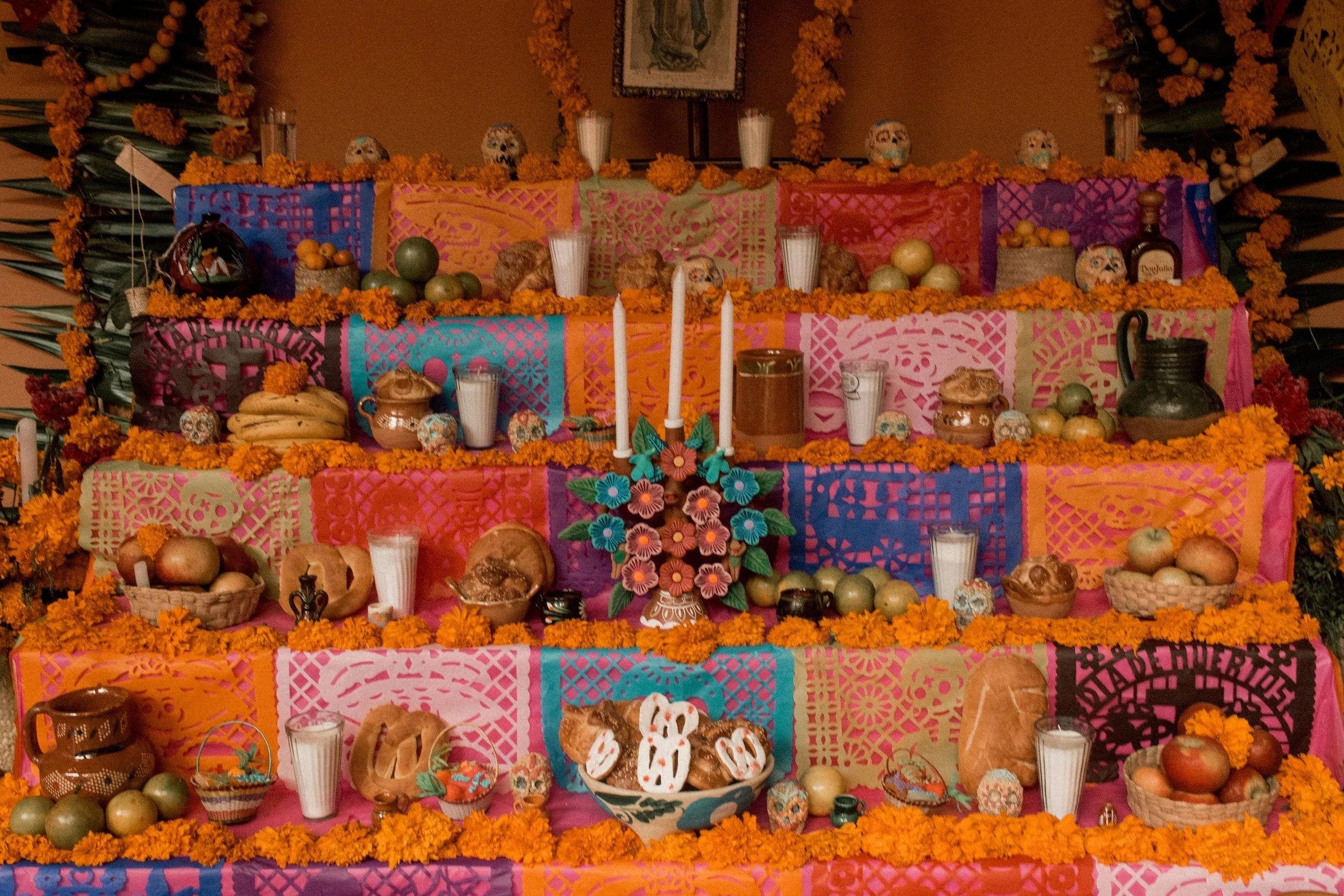
How is it celebrated? Depending on the region, festivities can include music, dancing, elaborate costumes and visits to family graves. Altars, known as ofrendas, are prepared with photographs, candles, marigolds and food and drink to welcome the dead.
Which leads us, as promised, to the chocolate. It seems, we can still enjoy chocolate after we’re dead!
An Ofenda You Can’t Refuse
Chocolate or cacao was originally consumed as a drink by the Mayan and Aztec civilisations. The practice of offering it to the dead may go back as far as the 1530s. An account by the Franciscan friar Motolinía describes Indigenous people making offerings during the Catholic commemoration of the dead.
These included maize, bread and chickens and, notably, cacao in place of wine.
And chocolate continues to play a part in these traditions today, although the customs vary from region to region.
In the village of Teotitlán del Valle in the southern Mexican state of Oaxaca, the indigenous Zapotec community prepares offerings specifically for the spirits of children on 31st October, including chocolate.
Among the things placed on the altars are the favourite foods of the deceased loved ones. Not only to honour and welcome their spirits but also to sustain them while they’re back on earth. These foods include pan de muerto, a traditional sweet bread, often enjoyed with hot chocolate by the living as well as the dead during the festival.
Chocolate To Die For
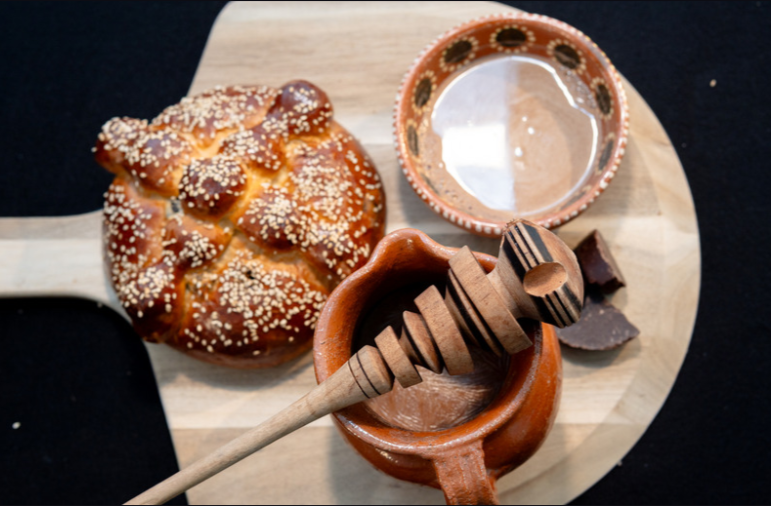
When I say hot chocolate, it’s very different to the version we know and love in the UK. Although it can be made with milk, it’s traditionally made with water and is known as ‘chocolate de agua’ which, unsurprisingly, literally means chocolate made with water.
It’s often made with stone-ground cacao rather than chocolate powder, and blended with cinnamon and sugar and this can make the texture a little grainy.
Finally, the hot chocolate is vigorously whisked to creat a thick, frothy top with a wooden tool called a molinillo, rolled between the palms.
There is also a rather macabre and considerably less appetising story associated with chocolate de agua.
According to an official Mexican government website, there was once a funerary custom in which chocolate was supposedly prepared using the water in which a deceased person had been bathed. The resulting drink (?!) was consumed by mourners, symbolically allowing them to absorb something of the deceased person's essence and maintain a connection with them.
Apparently.
Before you have nightmares (or add a note to your will), I haven’t been able to find a historical source to confirm the authenticity of this story!
Back to the ofrendas (phew). Chocolate may also appear on the ofrenda as a sweet, or in a mole — a sauce, some varieties of which contain (yes) chocolate.
And we’re not done.
The skull Beneath the Skin
You may have seen Dia de los Muertos costumes featuring faces painted with brightly patterned skulls.
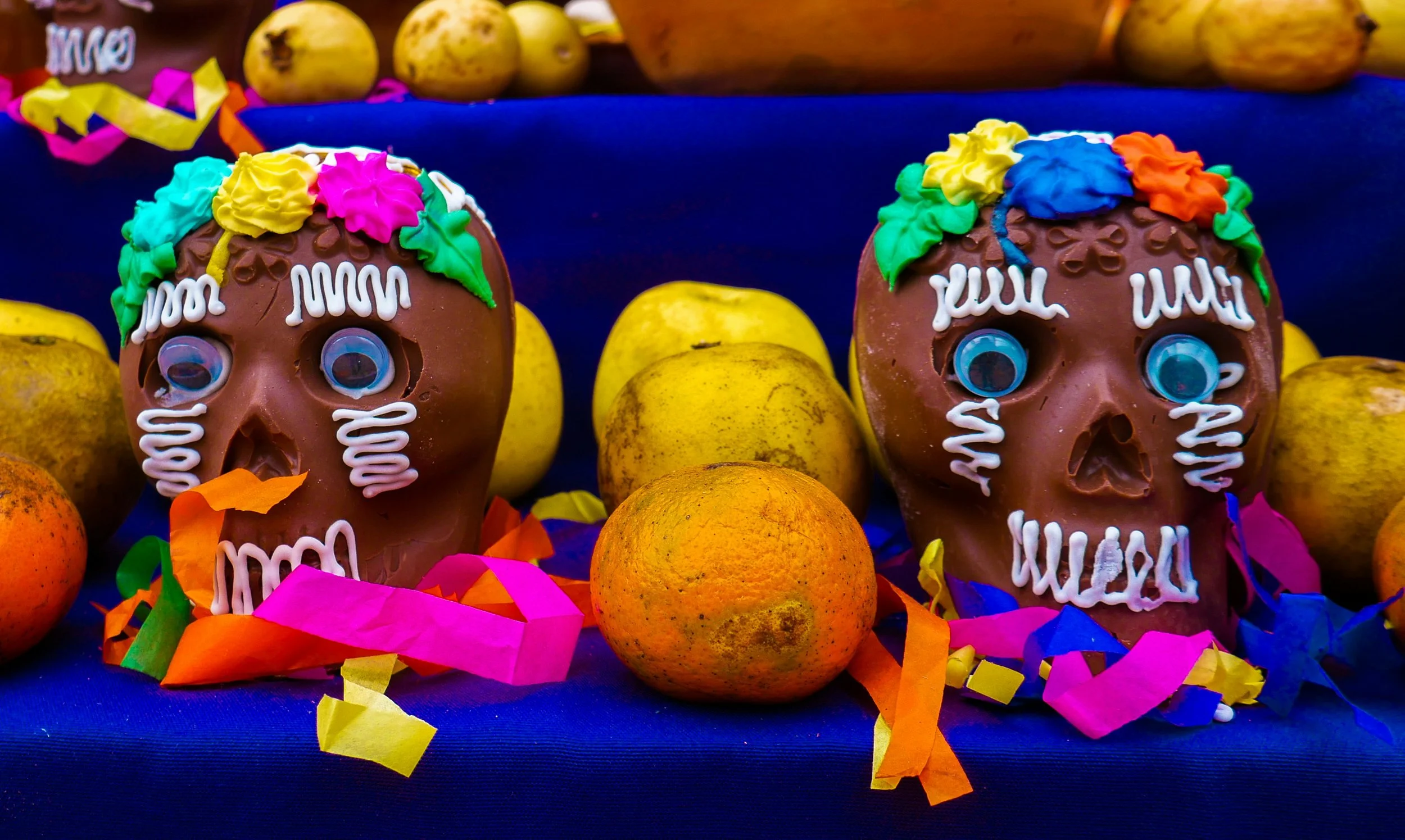
Far from an intention to be frightening, the skulls represent life and the cycle of existence. Indeed, they tend to embody the spirit of the entire festival. Whilst there is grief, death is a natural phase of our journey, not a end.
Skulls are also made from sugar (calaveras de azucar), highly decorated with brightly coloured flowers and
often have the name of the deceased or the living written on them. They often decorate ofrendas and are a common gift for both children and adults.
The skulls may also be made from amaranthe and (you guessed it) chocolate.
Naturally, I make chocolate skulls. Come on — why wouldn’t I? Mine tend to be more gothic and steampunk in style, decorated with chocolate roses, leaves, cogs and charms and usually finished with metallic effect lustre dust. However, I have made one or two inspired by the Day of the Dead for special orders, decorated in traditional style with flowers and details painted with coloured cocoa butter.
The Sweet Hereafter
Here in the UK, our traditions have tended to be more sombre, and many of those customs survive today. Just think of those Victorian hearses drawn by black plumed horse. Wearing black, speaking in hushed voices — we see this as a sign of respect for the deceased and a way to express our grief. The anniversary of death may be marked with a day that feels heavy and sorrowful, perhaps the exact opposite of how our loved one would wish to be remembered.
However, we're increasingly seeing funerals described as celebrations of life, with favourite music, colourful clothing, personal touches and even humour replacing some of the more traditional formality.
We may not be ready for the annual reunion just yet, but perhaps we're beginning to embrace something that Mexican families have long understood: celebrating someone's life and grieving their death aren't mutually exclusive.
And if you can enjoy eating that person’s favourite chocolate at the same time, so much the better.
Sources
The Origins of Día de los Muertos — Mexico's National Institute of Anthropology and History (INAH). Includes the 16th-century account by Motolinía describing offerings of cacao to the dead.
Understanding the Day of the Dead Tradition in Mexico — Horniman Museum, London. The history, symbolism and customs of the festival, including ofrendas, skulls and pan de muerto.
11 Indigenous Day of the Dead Altars — Mexico's National Institute of Indigenous Peoples (INPI). Includes the chocolate offerings for deceased children in Teotitlán del Valle, Oaxaca.
The Meaning of Day of the Dead Offerings — INPI. Includes the intriguing, but historically unverified, account of chocolate prepared with water used to bathe the deceased.
Sugar, Amaranth and Chocolate Skulls — Mexican Ministry of Agriculture. The history and traditions of edible decorative skulls.
Photo Credits
Day of the Dead celebrations - Photo by Chris Luengas on Unsplash
Ofrenda - Photo by Roberto Carlos Román Don on Unsplash
Decorated skulls - Photo by Daniela Martinez on Unsplash