
We’re Having A Heatwave
What This Cruel Summer Means To A Chocolatier
If you've read my blog before, you'll know that chocolate and heat don't mix particularly well — and that simply shoving it in the fridge isn't usually the answer. I've written before about the dos and don'ts of storing chocolate, although even I have to make exceptions when the weather becomes extreme. A slightly sticky truffle that's spent some time in the fridge is preferable to one that's melted or gone off before its time.
But storing the finished product is only part of the problem. First, I have to make it.
High Ideals
If you search the internet for ‘how to temper chocolate’, you’ll probably come across advice like this —
Ideal room temperature for tempering: 18–21°C
Ideal cooling temperature: 12°C
Storage: 12–20°C
Humidity below 65%
These are ideal conditions, but ideal conditions aren't always available to a small artisan chocolatier. Unless you have a climate-controlled production room, experience teaches you how to adapt — when you can work around the conditions and, just as importantly, when you can't.
With the climate changing as it has been in recent years, my business is already becoming more seasonal. If I waited for the tempering stars to align I wouldn’t make much chocolate!
So, yes hot weather makes working with chocolate more difficult. But that's the obvious part.
You don't know the half of it!
Boiled Sugar: Satan In A Saucepan
Some of my best-selling products start life as sugar and water. The sugar must be completely disolved, down to the very last tiny grain, before it’s boiled to whatever temperature the confection I’m making requires.
And sugar can be a temperamental little devil. One batch of syrup can behave differently from the next, even using exactly the same pan, recipe and ingredients. Even atmospheric pressure affects boiling point. It can happen at any time of year, but hot, humid weather adds a whole new layer of aggravation.
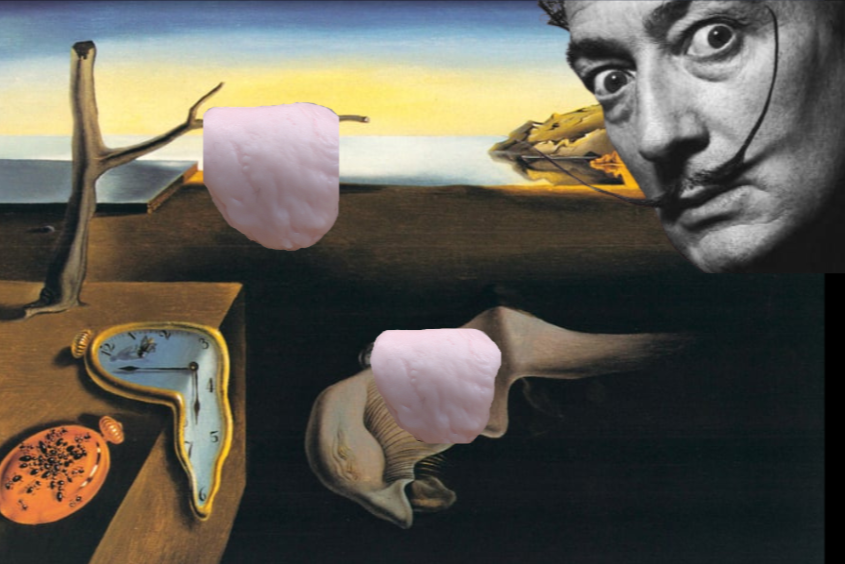
Fondant creams are particularly troublesome. Once the fondant has been made and cooled, I wrap it in greaseproof paper and put it into a sealed box, usually in the fridge, to rest and chill before I cut and enrobe it.
In a heatwave, that’s where things start to go wrong. Take chilled fondant into a warm kitchen and condensation quickly forms on the surface. Instead of nice, dry centres ready for dipping, I end up with damp,
sticky fondants that drape themselves elegantly over the dipping fork like one of Salvador Dalí’s melting clocks.
Honeycomb is an even bigger problem. The window for dipping it in chocolate once it’s cooled is minimal at best. Leave it too long and it starts to go sticky. You’ve just boiled a pan of sugar syrup to 150°C, pushing heat and moisture into the kitchen. Now you’ve got to cool the kitchen and the honeycomb as fast as possible so you can safely get the chocolate onto it. More than one batch has gone in the bin because the beautifully risen golden cloud I left to cool has collapsed to half its size and developed a solid layer of toffee on the bottom. It tastes nice but it’s not exactly honeycomb. And you can’t put it in the fridge to cool — too much moisture. Confections made from hot sugar seem to have a primeval desire to return to their natural liquid state when the conditions are warm and humid. Come the summer, honeycomb has to be banished from my website shop altogether as it ceases to be a viable product.
Caramel and Turkish Delight are, of course, also sugar based recipes but they’re much more angelic to work with. Except for the bit about standing over a hot pan. There’s something faintly absurd about boiling sugar syrup to ridiculous temperatures in a kitchen that you’re frantically trying to keep cool when it’s already sweltering outside.
If You Can’t Stand The Heat…
So just how do you keep your kitchen cool during not just one heatwave but four in quick succession. (Or is it five?)

We’re used to a temporate climate in this country. Most of our houses aren’t built with air conditioning, wooden shutters and tiled floors. This is Great Britain, not Southern Spain for heaven’s sake!
Trying to keep the kitchen consistently cool since the first heatwave in May has presented even more of a challenge than usual. It has to stay as cool as possible all through the summer months, not just the days I’m
actually making things. Trying to get the temperature down once it’s risen is very hard work!
My kitchen is East facing, and with nothing at the end of the garden but an open recreation ground, there’s no natural shade. Over the years I've developed a few ways of keeping things manageable. I’ve tried a portable air conditioning unit and a dehumidifier but they both essentially put more heat into the room just by running. By far the best method I’ve found is to freeze bottles of water and cool packs and put them in a big bowl in front of a fan on full speed. (Truth be told, I could actually do with this in the winter when I’m really busy.)
The extreme heat this year challenged my ingenuity but I came up with a fix - silver emergency blankets taped to the windows. They make the kitchen a little dark but they do a surprisingly good job of reflecting the sun outwards.
I dare say it all sounds a bit Heath Robbinson but a chocolatier’s gotta do what a chocolatier’s gotta do — even if it does make the house look like the bunker abode of a conspiracy theorist!
Sadly, there are times when — whatever I do — it’s just too hot to successfully make anything. At that point my Etsy shop goes into holiday mode and my website (which I can’t temporarily close) carries a ‘this heat is damaging to your chocolate’ warning.
Thinking Outside The Box
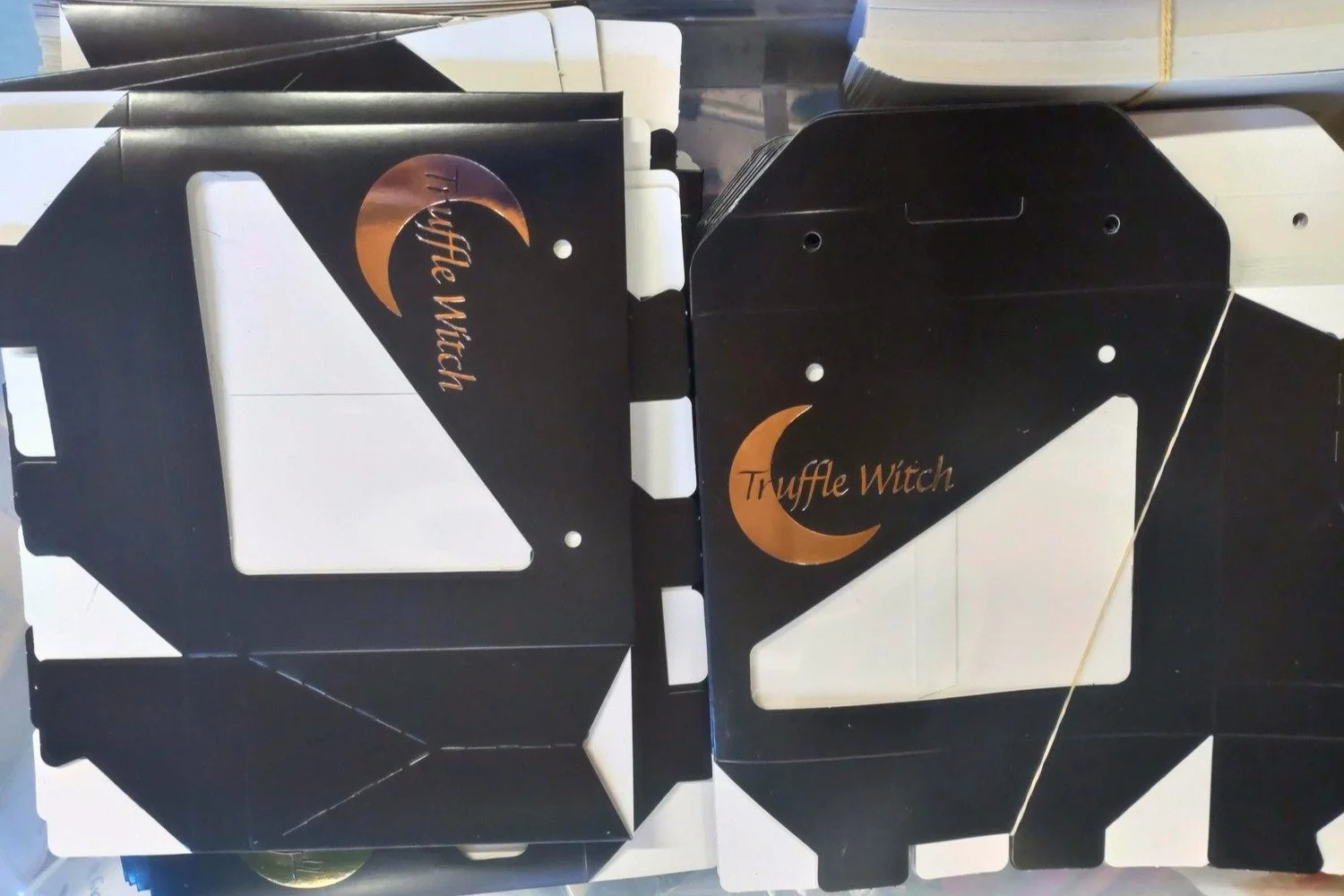
And it doesn’t end there. Apart from safely storing chocolate stock and products already made so they don’t bloom or melt, and keeping the kitchen cool, there’s packaging to consider.
Packaging, especially if it’s bespoke, is gradually getting more expensive and some companies have reduced the minimun run due to production costs. That means at any one time, £1000s can be tied up in stocks of boxes,
bags and other sundries. Most of which needs to be stored at normal ambient temperatures, not heatwaves. Extreme heat can damage adhesives and you may find, come the pre-Christmas rush, that your expensive swish boxes fall apart.
Finding somewhere cool enough to store everything is a challenge in itself. I need a bigger house!
Going Postal
The final hurdle comes when I put my carefully made chocolates into the hands of the postal service. I can make them under controlled conditions, pack them perfectly, stick a hopeful warning label to the box asking the Postie not to leave it in direct sunlight but that’s the best I can do. If getting into my car is anything to go by, the inside of a delivery van can be very much hotter than the weather outside. My nightmare vision is of customers opening their parcels and pouring out chocolate fondue!
So, while I may have a kitchen cool enough to make an order, the conditions outside my silver bubble make it impossible to dispatch.
I’ve been asked why I don’t use dry gel packs, as some companies — chocolate brands included — already do. The packs themselves may be dry, but anything cold can cause condensation, so they need to be insulated from the chocolates. That means bigger boxes, more packing materials and extra weight. More sophisticated temperature-control packs are available, but I don’t want to refrigerate my chocolates, just keep them cool, and the whole process quickly becomes more complicated and expensive.
Then there’s the environmental cost — gel packs, larger box, packing materials that wouldn’t normally be needed; heavier parcels could mean taking the car to the Post Office instead of walking. It all adds up and I know from emails I recieve that it’s something that matters to my customers as well as to me personally. Using additional resources to send a package in conditions caused by overuse of resources feels, well — wrong.
So the answer is, yes I absolutely can engineer a refrigerated parcel for truffles — but should I?
Somehow it all feels a little disproportionate to the amount of orders I’d be likely to recieve during hot periods anyway. When the temperature is pushing 30°C or more, we’re all more likely to be drawn to cool drinks and ice cream than rich truffles and bars of chocolate that melt if you look at them.
Maybe accepting that things are becoming more seasonal is a more appropriate response than finding ways to enable a product to travel in conditions to which it's fundamentally unsuited.
So, if you notice Truffle Witch disappearing from the internet for a few days when the next heatwave hits, don’t worry. I haven’t melted. I’m probably sitting in my silver bunker with an ice cream, waiting for chocolate weather to return.